Should we be surprised that the attorney is hoping for a lawsuit? I think it is important to determine how much the attorney will be paid to represent the districts in any lawsuits.
"The attorney representing all of the districts rejecting the law, Doug Mann, explained to the Union School Board before their vote that he is expecting--almost hoping--that Special Education advocacy groups will file suits against the districts to get the issue into the legal system so parents of students won't have to spend any money fighting the districts," reports Tulsa's Fox 23 News.
The report goes on to say that the, "districts are all using the same lawyer and banding together so they can share the financial burden of fighting House Bill 3393 and any subsequent lawsuits."
The districts keep protesting that their defiance is not about the money. Then they go on to explain how much the scholarships will cost the districts. If these districts are really concerned about the costs of the scholarships and the effect the scholarships will have on existing programs hopefully they will not mind explaining in similar detail how the legal costs will not negatively affect classroom programs. It's the least they could do under the circumstances.
Tuesday, October 12, 2010
Monday, October 11, 2010
Well established case law says House Bill 3393 is constitutional
 It is well established case law that a legislative act is presumed to be constitutional and will be upheld unless it is clearly, palpably and plainly inconsistent with the Constitution (1). The Oklahoma Supreme Court has consistently held that statutes should be construed whenever possible so as to uphold their constitutionality (2). There is no indication that the provisions of HB 3393 are plainly inconsistent with the Constitution. While the specific provisions of HB 3393 have not yet been reviewed by any court, other scholarship programs that were “neutral” or “of direct benefit to students” have been upheld by the Supreme Court and other courts. The unconstitutionality of a statute may not be urged by resort to hypothetical applications (3).
 The rules on construing legislative language have also been clearly set by the courts. Construction which would render the legislation absurd must be avoided; rational constructions are favored if language fairly permits (4). It is clear that the language in HB 3393 is mandatory and requires a public school to administer the payment of a scholarship upon the request of an eligible participant.
(1) Matter of Daniel Deborah and Leslie H., Okl, 591 P 2d 1175 (1979); In re Napier, Okl. , 532 P 2d 423 (1975).
(2) City of Norman v. Liddell, Okl., 596 P 2d 879 (1979); Newman v. Tax Commission, Okl., 596 P 2d 530 (1979); Post Oak Oil Co. v. Okla. Tax Commission, Okl., 575 P 2d 964 (1978); Ruble v. Redden, Okl., 517 P 2d 1124 (1973).
(3) In re Napier, Okl., 532 P 2d 423 (1975).


Parent Email: Too afraid to speak out against Jenks and their treatment of special education students
Dear Mr. Nelson, Thank you! Thank you! Thank you!
The statements you made regarding Jenks and Broken Arrow in the Tulsa World today are 100% correct! People in Tulsa and Jenks are too afraid to publically speak out against Jenks and their treatment of the special education students!
Jenks is currently being audited by the Office of Civil Rights for violating ADA laws and a list of Special Education Laws that they are in noncompliance. ...
Jenks also has a reputation for interpreting the law so that they don’t have to offer services and/or water the services down so it is very minimal. They also are in violation of offering the same services to all students rather than individualized as required by law.
 Jenks spends a unbelievable amount of money to keep the law firm on retainer because Jenks does not follow the law. I wonder what the public would say if they knew how much of our schools tax dollars went to pay the law firm? If the tax payers had a say in whether that money went to the law firm or the general education fund I know they would say the money should go to our kids! It is disgusting how much money the law firm gets.
It is ridiculous that Jenks insists that they educate and care about their special education kids. Since we [have been in Jenks] my [child] has regressed two years. They have such low expectations and do very little to increase their intelligence and more to teach the kids “life skills”.
Please don’t let up on them! No matter how intimidating they are and the law firm is …..Jenks thinks they are God and above the law and everyone else in this town and so many people and businesses cower down to them all the time. They have the attorneys scare everyone. Everyone knows this but no one has successfully been able to do anything about it. THANK YOU! Sincerely,
(I received this email from a parent within the last week. I've posted it because I want to share with others what I'm hearing from parents about the importance of House Bill 3393. The Parent Emails that I've been posting are a representative sample of the dozens of emails I've received because of HB3393.)
The statements you made regarding Jenks and Broken Arrow in the Tulsa World today are 100% correct! People in Tulsa and Jenks are too afraid to publically speak out against Jenks and their treatment of the special education students!
Jenks is currently being audited by the Office of Civil Rights for violating ADA laws and a list of Special Education Laws that they are in noncompliance. ...
Jenks also has a reputation for interpreting the law so that they don’t have to offer services and/or water the services down so it is very minimal. They also are in violation of offering the same services to all students rather than individualized as required by law.

It is ridiculous that Jenks insists that they educate and care about their special education kids. Since we [have been in Jenks] my [child] has regressed two years. They have such low expectations and do very little to increase their intelligence and more to teach the kids “life skills”.
Please don’t let up on them! No matter how intimidating they are and the law firm is …..Jenks thinks they are God and above the law and everyone else in this town and so many people and businesses cower down to them all the time. They have the attorneys scare everyone. Everyone knows this but no one has successfully been able to do anything about it. THANK YOU! Sincerely,
(I received this email from a parent within the last week. I've posted it because I want to share with others what I'm hearing from parents about the importance of House Bill 3393. The Parent Emails that I've been posting are a representative sample of the dozens of emails I've received because of HB3393.)
Federal courts have ordered public funds be spent for private school tuition
The United States Supreme Court in the 2009 Forrest Grove decision concluded "that IDEA authorizes [tuition] reimbursement for the cost of private special education services."
The Court recognized that if a public school fails to provide an appropriate education to a student as required by the Individuals with Disabilities Education Act (IDEA) that the public school could be required to pay for the private school placement chosen by the parents if the "...private-school placement is appropriate...."
The Court recognized that if a public school fails to provide an appropriate education to a student as required by the Individuals with Disabilities Education Act (IDEA) that the public school could be required to pay for the private school placement chosen by the parents if the "...private-school placement is appropriate...."
Speaker Benge Comments on Passing of Justice Opala
Sunday, October 10, 2010
Parent Email on HB3393: "From experience I can tell you that it is a struggle to get services"
I did want to pass my comments and concerns on to you. As a parent of a special needs child I am supportive of HB3393. I do think that optimally public schools should be supporting our special needs children but from experience I can tell you that it is a struggle to get services. I did express my concerns to my school board rep in Union and from the response I got it sounds like they will be joining other areas districts in 'ignoring' the law. It did seem to me that a good portion of the response that I received was drafted by attorney(s) that are evidently advising the board.
(I received this email from a parent within the last week. I've posted it because I want to share with others what I'm hearing from parents about the importance of House Bill 3393. The Parent Emails that I've been posting are a representative sample of the dozens of emails I've received because of HB3393.)
(I received this email from a parent within the last week. I've posted it because I want to share with others what I'm hearing from parents about the importance of House Bill 3393. The Parent Emails that I've been posting are a representative sample of the dozens of emails I've received because of HB3393.)
Sen. Anderson compares Jenks, Broken Arrow school boards to Gov. George Wallace

Sen. Anderson is the principal Senate author of House Bill 3393 and was key to securing its passage during the 2010 legislative session.
In the column Anderson writes, "In 1963, Alabama Gov. George Wallace made his infamous 'stand in the school house door' where he blocked black students from the right to enroll in the University of Alabama. Wallace was attempting to ignore the laws with which he disagreed by claiming they were unconstitutional ... ."
Read more: http://www.newsok.com/school-boards-display-callous-disregard-for-state-law/article/3502640?custom_click=headlines_widget#ixzz11yt0eW8m
Richest school districts tell parents they're out of luck
Saturday, October 9, 2010
Parent Email: "These children are victims of bureaucratic policies that would prefer to see kids wait"
Dear Representative Nelson,
Thank you... thank you... thank you
I have now seen firsthand exactly what your campaign for HB 3393 is all about. …
I was never aware of how serious these issues are for our delayed or special needs child until we had a son born with mild cerebral palsy. Since then I've sought out families across Oklahoma to learn more about their struggles with assistance for their children. What I've heard has been very sad.
 At three and a half years of age now, our son … has only attended public school here … for the past 6 months. It has truly been a disappointment and a very sad state of affairs to see how these children are victims of bureaucratic policies that would prefer to see kids wait until a "later date" to really address problems. Please believe me when I say that I could go on and one about what really happens in the public school setting at IEP meetings, and what does not happen in the classroom that should. The same people that claim how critical it is to get these therapies (OT, PT, and speech therapy) at the earliest stages of brain development are some of the same people that want to deny the children many of these "life" critical foundation therapies. My eyes have only been opened by parents of other children who are already years down the road in this process...it's very sad.
It seems that the only way to get the school systems attention frequently is to mention due process... very unfortunate and wrong. …
We're much too smart and educated in this country to let our children wither this way.
Thanks so much and may God continue to bless you sir.
Sincerely,
BB
(I received this email from a parent within the last week. I've posted it because I want to share with others what I'm hearing from parents about the importance of House Bill 3393. This Parent Email is a representative sample of the dozens of emails I've received because of HB3393.)
Thank you... thank you... thank you
I have now seen firsthand exactly what your campaign for HB 3393 is all about. …
I was never aware of how serious these issues are for our delayed or special needs child until we had a son born with mild cerebral palsy. Since then I've sought out families across Oklahoma to learn more about their struggles with assistance for their children. What I've heard has been very sad.

It seems that the only way to get the school systems attention frequently is to mention due process... very unfortunate and wrong. …
We're much too smart and educated in this country to let our children wither this way.
Thanks so much and may God continue to bless you sir.
Sincerely,
BB
(I received this email from a parent within the last week. I've posted it because I want to share with others what I'm hearing from parents about the importance of House Bill 3393. This Parent Email is a representative sample of the dozens of emails I've received because of HB3393.)
Will HB 3393 Cost School Districts Money?
According to a news report by KJRH Roger Wright, Executive Administrator of School and Community Services at Jenks Public Schools, says that the scholarships created in HB 3393 would cost the district money and that "district would have to cut services elsewhere to make up the difference, which would be unfair to the rest of the students in the school system."
The cost of the scholarships is covered in the law. The Tulsa area districts act as if the funding for the student stops when they transfer on a scholarship and that the district must find the money to pay the scholarship on their own. That is not the case.
The BALedger.com reports that Doug Mann, the school board attorney for Broken Arrow, claims that HB 3393 “can get very expensive very quickly.” The story goes on to quote Mann, “The fact of the matter is that the program that that child was in still has to be funded but it now has less funding for that program.”
What districts are not mentioning is that the money for the scholarship is fully funded. The district keeps 5% of the scholarship amount to cover administrative costs. In addition to that, the district can continue to count the transferring student for funding purposes for up to two years after the transfer to allow them to absorb their fixed costs. Added to all this money comes less expense because they have one less student.
The reality here is that school districts lose the funding for each student that transfers out of their district after two years even if the student transfers to another school district or to a private or home school setting. However, under HB 3393 the districts retains 5% of the scholarship amount that they would not receive for any other transfer.
House Bill 3393 is a win-win. School districts are protected financially and will have smaller class room sizes with each student that transfers with a scholarship. Most importantly the children benefit because they have more options so they can find and receive the very best education services for their particular special need.
The cost of the scholarships is covered in the law. The Tulsa area districts act as if the funding for the student stops when they transfer on a scholarship and that the district must find the money to pay the scholarship on their own. That is not the case.
The BALedger.com reports that Doug Mann, the school board attorney for Broken Arrow, claims that HB 3393 “can get very expensive very quickly.” The story goes on to quote Mann, “The fact of the matter is that the program that that child was in still has to be funded but it now has less funding for that program.”
What districts are not mentioning is that the money for the scholarship is fully funded. The district keeps 5% of the scholarship amount to cover administrative costs. In addition to that, the district can continue to count the transferring student for funding purposes for up to two years after the transfer to allow them to absorb their fixed costs. Added to all this money comes less expense because they have one less student.
The reality here is that school districts lose the funding for each student that transfers out of their district after two years even if the student transfers to another school district or to a private or home school setting. However, under HB 3393 the districts retains 5% of the scholarship amount that they would not receive for any other transfer.
House Bill 3393 is a win-win. School districts are protected financially and will have smaller class room sizes with each student that transfers with a scholarship. Most importantly the children benefit because they have more options so they can find and receive the very best education services for their particular special need.
Thursday, October 7, 2010
Jenks and Broken Arrow School Boards "Bad Losers"
The Tulsa World is not a fan of House Bill 3393. However, they are no fans of the Jenks and Broken Arrow School Districts' decision to brazenly ignore this new state law that benefits special education students.
The editorial writers on today's opinion page wrote that, "Refusing to abide by state law suggests one of two things: Either the school districts are the victims of discrimination and can't count on equal treatment in the judicial and political spheres, or they're just bad losers."
We both agree that it is the later.
The editorial writers on today's opinion page wrote that, "Refusing to abide by state law suggests one of two things: Either the school districts are the victims of discrimination and can't count on equal treatment in the judicial and political spheres, or they're just bad losers."
We both agree that it is the later.

Tuesday, October 5, 2010
Reps. Nelson and Shumate Respond
State Reps. Jason Nelson (R-Oklahoma City) and Jabar Shumate (D-Tulsa) discuss the Jenks and Broken Arrow school districts decision to violate state law providing scholarships to special-needs students.
Tulsa-Area Schools Deny Opportunity to Special-Needs Students
OKLAHOMA CITY (October 5, 2010) – The architect of a major special education reform law says two of the states’ highest-paid public-school superintendents and their boards are willfully ignoring the new law due to questionable legal advice, raising serious concerns about the treatment of special-needs students in those districts.
 “It is a serious matter anytime a government entity thumbs their nose at the law. I think those with authority over any such agency must understand the gravity of this offense and the potential consequences, and any responsible legal counsel should encourage their client to strive to comply with the law,” said state Rep. Jason Nelson, R-Oklahoma City.
The Tulsa World reported that Jenks and Broken Arrow Public Schools, two of the states’ largest school districts, are refusing to implement a new scholarship law designed to benefit students with disabilities.
The Lindsey Nicole Henry Scholarships for Students with Disabilities Program Act was created by House Bill 3393 during the 2010 legislative session. Under the new law, children with disabilities who have an individualized education program (IEP) qualify for a scholarship to attend any private school that meets the accreditation requirements of the State Board of Education. The law went into effect August 27.
Nelson has been contacted by several parents of special-needs students in the Tulsa area, and said the schools’ actions are reason for “serious concern” about the treatment of special-needs students in those districts.
“The fact that these schools will openly ignore state law justifies parents’ fears and concerns about poor treatment of children with disabilities in these districts,” Nelson said. “If these districts are willing to brazenly flaunt the law in this case, I can only imagine how bad it must be for the parents who are trying to get the district to follow federal law and case law during IEP meetings.”
Although Jenks and Broken Arrow officials claimed the handful of scholarships would somehow create a financial hardship, the actual scholarship amounts will always be less than what the district originally received from the state.
The schools violating state law are also represented by the Rosenstein Fist Ringold law firm, which has been involved in similar failed legal strategies. The firm represented schools unsuccessfully suing the state over a charter school law.
“Every attorney I have visited with about the legal tactics of these districts and their lawyers are surprised they have not requested an attorney general’s opinion or sought declaratory judgment by a court rather than stoop to irresponsible and destructive childishness,” Nelson said. “They evidently want to settle a political score by punishing these children and their parents.
“Sincere people can have disagreements over this new program. But it’s not up to individual school districts to pick and choose which laws they will follow. In the end, we need to worry about doing what’s right for special-needs children, and not about the whims of quarter-million-dollar superintendents or their overpaid, underperforming attorneys.”
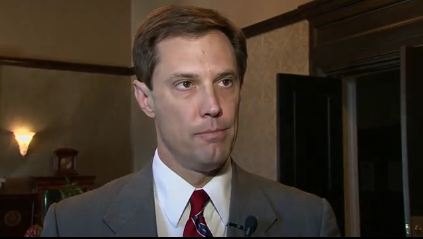
The Tulsa World reported that Jenks and Broken Arrow Public Schools, two of the states’ largest school districts, are refusing to implement a new scholarship law designed to benefit students with disabilities.
The Lindsey Nicole Henry Scholarships for Students with Disabilities Program Act was created by House Bill 3393 during the 2010 legislative session. Under the new law, children with disabilities who have an individualized education program (IEP) qualify for a scholarship to attend any private school that meets the accreditation requirements of the State Board of Education. The law went into effect August 27.
Nelson has been contacted by several parents of special-needs students in the Tulsa area, and said the schools’ actions are reason for “serious concern” about the treatment of special-needs students in those districts.
“The fact that these schools will openly ignore state law justifies parents’ fears and concerns about poor treatment of children with disabilities in these districts,” Nelson said. “If these districts are willing to brazenly flaunt the law in this case, I can only imagine how bad it must be for the parents who are trying to get the district to follow federal law and case law during IEP meetings.”
Although Jenks and Broken Arrow officials claimed the handful of scholarships would somehow create a financial hardship, the actual scholarship amounts will always be less than what the district originally received from the state.
The schools violating state law are also represented by the Rosenstein Fist Ringold law firm, which has been involved in similar failed legal strategies. The firm represented schools unsuccessfully suing the state over a charter school law.
“Every attorney I have visited with about the legal tactics of these districts and their lawyers are surprised they have not requested an attorney general’s opinion or sought declaratory judgment by a court rather than stoop to irresponsible and destructive childishness,” Nelson said. “They evidently want to settle a political score by punishing these children and their parents.
“Sincere people can have disagreements over this new program. But it’s not up to individual school districts to pick and choose which laws they will follow. In the end, we need to worry about doing what’s right for special-needs children, and not about the whims of quarter-million-dollar superintendents or their overpaid, underperforming attorneys.”
Steele Expresses Concern Over Schools’ Violation of New Law

The school boards at both schools voted this week to violate Oklahoma law, which allows students with disabilities, such at autism or Down’s syndrome, to receive scholarships and transfer to schools that specialize in aiding those populations.
“It’s concerning for these schools to break the law at the expense of children with special needs, and it’s disturbing for them to ignore the law over a philosophical difference of opinion,” said Steele, R-Shawnee. “If these districts have concerns, they should communicate those issues with the Legislature to bring about positive solutions that would benefit students with special needs.
“We can no more allow schools to violate the law because officials object to it than we can allow drivers to ignore the speed limit in a school zone if it ‘inconveniences’ them,” Steele said.
House Bill 3393, by state Rep. Jason Nelson, created the Lindsey Nicole Henry Scholarships for Students with Disabilities Program Act.
The Oklahoma program is similar to laws in Florida and Georgia that have easily withstood legal challenges. The Florida program has been in place since 1999 and now serves approximately 20,000 students with special needs.
In addition, the scholarship program does not require new spending, but merely redirects existing state funds that are currently spent on the student.
School officials claimed the transfers authorized by the scholarship program would somehow harm their financial standing, but only seven students have applied for the scholarships at Jenks and eight at Broken Arrow, according to the Tulsa World. Both schools are among the largest in the state.
“Our focus should be on helping children with special needs,” Steele said. “It’s clear the parents of these children believe a specialized learning environment will provide greater benefit for their kids.”
Wednesday, September 1, 2010
State Department of Education: Lindsey Nicole Henry Scholarships Page

The new page includes a letter to superintendents as well as a list of participating private schools. Superintendent Sandy Garrett and her staff have worked hard and done a great job in implementing this new program.
Report on Recent Candidate Forum on Disability Issues
This post links to an www.ecapitol.net news story written by Clint Sloan who covered the recent candidate forum I attended where issues important to Oklahomans with disabilities where discussed.
I quickly hit the high points of the work I've been doing since being elected in 2008 within the five minutes each candidate had to speak and answer questions. I thought the forum went well and I appreciated the opportunity visit with those in attendance.
I continue to work with the Developmental Disabilities Services Division at DHS to address the huge number of Oklahomans on the Waiting List for disability services. I will be attending the Waiting List Meeting tomorrow at 1:30 p.m. at DHS.
I also mentioned the Lindsey Nicole Henry Scholarships for Students with Disabilities Program that became effective the day before.
POLITICS: Candidates discuss disability issues
08/30/2010 by Clint Sloan
"(POL) Seventeen candidates - along with one liaison to a candidate - running for state and federal offices spoke at a Saturday forum discussing issues affecting disabled citizens.
"The event occurred at the Oklahoma History Center and was sponsored by the Oklahoma Rehabilitation Council and the Heartland Council for the Blind. The candidates discussed education, transportation, budgetary matters and job creation, along with other issues."
Click here to read the complete eCapitol story.
I quickly hit the high points of the work I've been doing since being elected in 2008 within the five minutes each candidate had to speak and answer questions. I thought the forum went well and I appreciated the opportunity visit with those in attendance.
I continue to work with the Developmental Disabilities Services Division at DHS to address the huge number of Oklahomans on the Waiting List for disability services. I will be attending the Waiting List Meeting tomorrow at 1:30 p.m. at DHS.
I also mentioned the Lindsey Nicole Henry Scholarships for Students with Disabilities Program that became effective the day before.
POLITICS: Candidates discuss disability issues
08/30/2010 by Clint Sloan
"(POL) Seventeen candidates - along with one liaison to a candidate - running for state and federal offices spoke at a Saturday forum discussing issues affecting disabled citizens.
"The event occurred at the Oklahoma History Center and was sponsored by the Oklahoma Rehabilitation Council and the Heartland Council for the Blind. The candidates discussed education, transportation, budgetary matters and job creation, along with other issues."
Click here to read the complete eCapitol story.
Adoptions and birth certificates
(This letter was forwarded to me recenly via email and I'm posting it here for informational purposes. I understand that it was printed by the Tulsa World on August 28, 2010. I have not taken a position on this proposal. I do welcome your thoughts and suggestions. The reference to the work being done by me and Sen. Russell is refering to the two of us co-chairing the Adoption Review Task Force. The goal, in part, of the Task Force is to review all state laws related to the adoption of minors and make suggestions to the Legislature that will reduce fraud.)
Letter to the Editor by: Samantha Franklin, Bixby
Saturday, August 28, 2010
As an adult adoptee I appreciate the work Sen. Steve Russell and Rep. Jason Nelson are doing to better ensure more ethical adoption in Oklahoma.
When a child is born in Oklahoma and adopted, the birth certificate is sealed, and a new, amended birth certificate is created. Children born after 1997 have the right to obtain their original birth certificate upon adulthood. Adoptees born before 1997 can obtain it if a judge rules "good cause."
There is no law in Oklahoma that mandates adoption professionals to ensure the children they work with even have a factual, unfalsified original birth certificate. Please help ensure that our original birth certificates are factual and unfalsified.
This should be a situation that all Oklahomans, including adoptive parents, should take notice of if they think ethical adoption is important. Adoptees are considered as perpetual children in the eyes of the law and are being denied their medical and genealogical histories and truth. This is a generational issue, for all adoptees, their families (both by birth and adoption) and their children after them.
Unfortunately, many unethical practices are being hidden behind archaic "sealed records" laws. Even district attorneys' hands are tied to properly investigate because all adoption proceedings are sealed upon completion. Oklahoma needs to take a serious look at the states that have passed legislation restoring the right of adult adoptees to obtain their original birth certificates.
Letter to the Editor by: Samantha Franklin, Bixby
Saturday, August 28, 2010
As an adult adoptee I appreciate the work Sen. Steve Russell and Rep. Jason Nelson are doing to better ensure more ethical adoption in Oklahoma.
When a child is born in Oklahoma and adopted, the birth certificate is sealed, and a new, amended birth certificate is created. Children born after 1997 have the right to obtain their original birth certificate upon adulthood. Adoptees born before 1997 can obtain it if a judge rules "good cause."
There is no law in Oklahoma that mandates adoption professionals to ensure the children they work with even have a factual, unfalsified original birth certificate. Please help ensure that our original birth certificates are factual and unfalsified.
This should be a situation that all Oklahomans, including adoptive parents, should take notice of if they think ethical adoption is important. Adoptees are considered as perpetual children in the eyes of the law and are being denied their medical and genealogical histories and truth. This is a generational issue, for all adoptees, their families (both by birth and adoption) and their children after them.
Unfortunately, many unethical practices are being hidden behind archaic "sealed records" laws. Even district attorneys' hands are tied to properly investigate because all adoption proceedings are sealed upon completion. Oklahoma needs to take a serious look at the states that have passed legislation restoring the right of adult adoptees to obtain their original birth certificates.
Monday, August 30, 2010
MEDIA ADVISORY: Lawmakers to Review New Scholarship Program for Special Needs Students
 FOR IMMEDIATE RELEASE:
Contact: State Rep. Jason Nelson
Capitol: (405) 557-7335
WHO: State Rep. Jason Nelson (R-Oklahoma City), and members of the House Human Services Committee
WHAT: Legislative study on House Bill 3393, the Lindsey Nicole Henry Scholarships for Students with Disabilities Program Act. Under the new law, children with disabilities who have an individualized education program (IEP) qualify for a scholarship to attend any private school that meets the accreditation requirements of the State Board of Education.
WHERE:
Oklahoma State Capitol, Room 412 C
2300 N. Lincoln Boulevard
WHEN: 10:30 a.m., Tuesday, August 31
Friday, August 27, 2010
Parents Encouraged to Apply for Special Needs Scholarships

“The Lindsey Nicole Henry Scholarships for Students with Disabilities Program Act became law today, and it’s very important that the families of special needs children are aware of this opportunity and take advantage of it,” said Nelson, R-Oklahoma City. “This program creates new opportunities for many children who would otherwise be unable to obtain educational services truly tailored to their unique needs.”
Under House Bill 3393, children with disabilities who have an individualized education program (IEP) qualify for a scholarship to attend any private school that meets the accreditation requirements of the State Board of Education.
The legislation, authored by Nelson and by state Sen. Patrick Anderson, had strong support from many families of children with autism.
The state Board of Education finalized the rules allowing implementation of the scholarship program on August 26, and parents can now contact their resident school district to apply for the program, Nelson said.
“Having visited with many parents of special-needs students, I know how important this scholarship program is to those families,” Nelson said. “It will allow those parents to provide the best education and best future possible for their children beginning this school year. Every parent interested in this program should take advantage of it.”
The scholarship program created through House Bill 3393 does not require new spending, but merely redirects existing state funds that are currently spent on the student.
Other states with similar laws include Florida, Georgia, Utah, Ohio and Arizona. The Florida program has been in place since 1999 and now serves approximately 20,000 students with special needs. House Bill 3393 closely mirrors the Florida and Georgia laws.
The legislation has been named the Lindsey Nicole Henry Scholarships for Students with Disabilities Program Act to honor the memory of one of the Gov. Brad Henry’s daughters, who died of a rare neuromuscular disease as an infant.
Lawmakers will soon conduct a legislative study on the new law to seek ways to increase its benefit for Oklahoma families. The first meeting will be held Aug. 31 with a second study date to be scheduled later.
State Board of Ed Passes Rules to Implement HB 3393, The Lindsey Nicole Henry Scholarships

"I've worked closely with the State Department of Education and State Superintendent Sandy Garrett during the drafting of the rules by the agency," said Rep. Jason Nelson, author of HB 3393. "They have done a great job fielding questions about the program and addressing those question in the new rules."
Here are the new emergency rules which still must be approved by Governor Brad Henry. It is anticipated that he will approve the rules.
SUBCHAPTER 13. SPECIAL EDUCATION
210:15-13-7. Lindsey Nicole Henry Scholarship for Students with Disabilities Program
(a) Scholarship Requests. When a parent of an eligible student requests a scholarship, they must notify the district of residence. The district of residence is defined as the legal district of residence, unless the child is a child with an IEP who has been on a transfer of any kind for three consecutive years, in which case the district is then defined as the receiving district, as required by 70 O.S. 13-103(d). If a child is on a transfer of any kind, that does not meet the three-year rule, and accepts the scholarship, the transfer is effectively terminated.
(b) Payments. Payments will be made to the private school on a quarterly basis upon verification of continued enrollment and attendance at the private school. Payments will be made in arrears, following the completion of each quarter. The payments will be made after the private school provides the public school with a quarterly attendance record for each child receiving the scholarship.
(c) Private School Eligibility. In order to be eligible to accept students on the scholarship, private schools must be accredited by the State Board of Education or another accrediting association approved by the State Board of Education. Only school districts within the state of Oklahoma can be accredited by the State Board of Education. No out of state schools are eligible to participate in the scholarship program.
(d) Amount of Scholarship. Within ten business days of receipt by the public school district of the parental request the State Department of Education must receive from the public school a request form for a determination of the calculation of the maximum scholarship amount. The State Department of Education must provide the calculation of the maximum amount of the scholarship to the public school in writing within fifteen business days of the receipt of the request. The parent shall be notified of the maximum amount of the scholarship in writing in a timely manner, not to exceed thirty business days from the request. Scholarship amounts will be calculated at the time of the parental request and will not change during the course of the school year regardless of a school district’s mid-year adjustments. The amount of the scholarship will be calculated annually as required by 70 O.S. 13-101.1, Section 2(F)(1).
(e) Tracking. School districts providing scholarships shall annually report for child-count and funding purposes, all students who are attending a private school under the scholarship program to the State Department of Education. Students must be reported as Lindsey Nicole Henry Scholarship Students on both the Special Education Child Count and the First Quarter Statistical Report (FQSR) and the Annual Statistical Report (ASR). These scholarship students will also be tracked through the WAVE.
Tuesday, August 3, 2010
House Speaker Designate Announces Proposed Changes to the Conference Committee Process

OKLAHOMA CITY (July 28, 2010) — House Speaker-Designate Kris Steele announced today he intends to make changes to the conference committee process in the House that will make the procedure more transparent and open to the public.
Beginning next legislative session, Steele said he plans to put in place a hard 24-hour rule that will require a House conference committee report to be filed and posted online for a full day before it can be considered on the House floor.
Currently, House rules require House conference committee reports be posted on the calendar at least 24 hours for review. But, that rule is waived in the last two days of session. Keeping the 24-hour rule in place throughout the entire conference process will give members, the public and the press time to read bills and better determine their impact on Oklahomans, said Steele.
Sunday, July 4, 2010
Why do I need to maintain my home PC?
From the Desk of CPT Jeff Elliott, Oklahoma Office of Homeland Security
Home Personal Computer (PC) Maintenance for Windows Operating Systems
Why do I need to maintain my home PC?

As with most types of equipment, you must perform periodic maintenance on your home PC to keep it in good operating condition. Performing maintenance will help your PC run faster, use resources more efficiently, and could save you from headaches caused by system failures and degradation. Most importantly, proper PC maintenance is crucial in order to protect your machine from security threats such as worms, viruses and other malicious activity.
How do I keep my home PC maintained?
Home Personal Computer (PC) Maintenance for Windows Operating Systems
Why do I need to maintain my home PC?

As with most types of equipment, you must perform periodic maintenance on your home PC to keep it in good operating condition. Performing maintenance will help your PC run faster, use resources more efficiently, and could save you from headaches caused by system failures and degradation. Most importantly, proper PC maintenance is crucial in order to protect your machine from security threats such as worms, viruses and other malicious activity.
How do I keep my home PC maintained?
Thursday, July 1, 2010
State Senate Plans Interim Studies
The Oklahoma State Senate has approved interim studies for this summer and fall.
Below is a list of the approved studies with the name of the Senator and the topic of the study. The complete list with details can be found on the Senate website.
Anderson - Covenant Marriage Proposals
Anderson - 911 funding
Below is a list of the approved studies with the name of the Senator and the topic of the study. The complete list with details can be found on the Senate website.
Anderson - Covenant Marriage Proposals
Anderson - 911 funding
Tuesday, June 29, 2010
Private schools that are currently accredited by the Oklahoma State Department of Ed

Several parents have asked me which private schools are participating. Private schools that wish to participate in the program must be accredited by the Oklahoma State Department of Education (SDE) and they must notify the SDE of their desire to participate. There is no current list of participating private schools, but there is a list of private schools currently accredited by the SDE. If any of these schools wish to participate, they will simply need to notify the SDE.
I urge interested parents to contact private schools to find out if they intend to accept the scholarships. I have included a link to the SDE list of accredited private schools to help parents identify those schools that are now eligible to participate.
If a school wishes to participate but is not currently accredited, it will need to achieve accreditation first.
You can also find a more readable version of HB3393 for parents on this blog.
I will provide more details as the SDE develops administrative rules to implement the new program. The State Board of Education is tentatively scheduled to take up consideration of proposed administrative rules at their July 27th meeting.
Interim study on Lindsey Nicole Henry Scholarships among those approved by Speaker
OKLAHOMA CITY (June 24, 2010) – House Speaker Chris Benge today approved 68 interim studies that will be conducted over the summer and fall prior to the next legislative session.
The studies cover a wide range of issues, including child welfare services, agency consolidation, math education in Oklahoma schools, tax credits and incentives, and a review of recent government modernization efforts, among other topics.
"Interim studies give lawmakers an opportunity to investigate and flesh out potential legislative proposals before drafting bills," said Benge, R-Tulsa. "This year we have a good set of studies covering a diverse array of topics."
Overall, 76 study requests were approved, although eight were combined with either similar or duplicate proposals, bringing down the total number of actual studies to 68.
 A study on the Lindsey Nicole Henry Scholarships Program created by House Bill 3393 was among those approved. Rep. Jason Nelson, R-Oklahoma City, requested the study to monitor the implementation of the new special education school choice law.
"During session I told opponents and supporters of HB3393 that I would request an interim study to monitor the implementation of the new law so that any unforeseen issues that come up can be reviewed and addressed during the next session," said Nelson. "The study will give us the opportunity to hear from public and private schools, parents and students as well the State Department of Education about the level of interest and participation in the program and to discover any challenges that need to be addressed by the next legislature."
Due to the budget situation, the number of days committees can conduct interim studies was limited to reduce costs.
"In light of the budget situation, we felt it was important to strike a balance between reducing expenses and allowing for legitimate examination of issues," Benge said.
Click http://www.okhouse.gov/Committees/ShowInterimStudies.aspx to see the list of interim studies.
The studies cover a wide range of issues, including child welfare services, agency consolidation, math education in Oklahoma schools, tax credits and incentives, and a review of recent government modernization efforts, among other topics.
"Interim studies give lawmakers an opportunity to investigate and flesh out potential legislative proposals before drafting bills," said Benge, R-Tulsa. "This year we have a good set of studies covering a diverse array of topics."
Overall, 76 study requests were approved, although eight were combined with either similar or duplicate proposals, bringing down the total number of actual studies to 68.

"During session I told opponents and supporters of HB3393 that I would request an interim study to monitor the implementation of the new law so that any unforeseen issues that come up can be reviewed and addressed during the next session," said Nelson. "The study will give us the opportunity to hear from public and private schools, parents and students as well the State Department of Education about the level of interest and participation in the program and to discover any challenges that need to be addressed by the next legislature."
Due to the budget situation, the number of days committees can conduct interim studies was limited to reduce costs.
"In light of the budget situation, we felt it was important to strike a balance between reducing expenses and allowing for legitimate examination of issues," Benge said.
Click http://www.okhouse.gov/Committees/ShowInterimStudies.aspx to see the list of interim studies.
Sunday, June 27, 2010
Children Win as Louisiana Enacts Special Needs Scholarship Program
Washington, D.C. (June 25, 2010) - Louisiana Governor Bobby Jindal this week signed into law the nation's 20th private school choice program, which will allow children with special needs to use state-funded scholarships to attend the private schools of their parents' choice.
Hailed by school choice activists as a significant, bipartisan victory for children with special needs in Louisiana, the legislation enacts a two-year pilot program benefiting children in the state’s parishes with populations of 190,000 people or more. Accordingly, children in Caddo, East Baton Rouge, Jefferson, Lafayette, Orleans, and St. Tammany parishes will be eligible to participate.
The scholarships are worth up to half the cost of what the state pays to send participating children to public schools. The new law will assist children in Kindergarten through eighth grade who have autism, developmental delay or other specific learning disorders.
“This new program is a significant victory for Louisiana's children,” said Betsy DeVos, chairman of the American Federation for Children, a leading school choice advocacy organization. “This program will improve educational access and quality for thousands of students with special needs across the state, and we applaud legislators from both parties for doing what is right for families and not bowing to pressure from special interests.”
The bipartisan piece of legislation was authored by Representative Franklin Foil (R-Baton Rouge) and cosponsored by Representative Major Thibaut Jr. (D-New Roads), Representative Patrick Williams (D- Shreveport), Senator Conrad Appel (R-Metairie), Senator Ann Duplessis (D-New Orleans), Senator Eric LaFleur (D-Ville Platte), and Senator Gerald Long (R-Winnfield).
The School Choice Pilot Program for Certain Students with Exceptionalities Act will place Louisiana in the ranks of six other states (Arizona, Georgia, Florida, Ohio, Utah, and Oklahoma) that have enacted school choice programs designed for children with special needs. Across the country there are approximately 24,555 students enrolled in these programs and nearly 200,000 students participating in private school choice programs in general.
Posted on Saturday June 26, 2010 | Louisiana
Hailed by school choice activists as a significant, bipartisan victory for children with special needs in Louisiana, the legislation enacts a two-year pilot program benefiting children in the state’s parishes with populations of 190,000 people or more. Accordingly, children in Caddo, East Baton Rouge, Jefferson, Lafayette, Orleans, and St. Tammany parishes will be eligible to participate.
The scholarships are worth up to half the cost of what the state pays to send participating children to public schools. The new law will assist children in Kindergarten through eighth grade who have autism, developmental delay or other specific learning disorders.
“This new program is a significant victory for Louisiana's children,” said Betsy DeVos, chairman of the American Federation for Children, a leading school choice advocacy organization. “This program will improve educational access and quality for thousands of students with special needs across the state, and we applaud legislators from both parties for doing what is right for families and not bowing to pressure from special interests.”
The bipartisan piece of legislation was authored by Representative Franklin Foil (R-Baton Rouge) and cosponsored by Representative Major Thibaut Jr. (D-New Roads), Representative Patrick Williams (D- Shreveport), Senator Conrad Appel (R-Metairie), Senator Ann Duplessis (D-New Orleans), Senator Eric LaFleur (D-Ville Platte), and Senator Gerald Long (R-Winnfield).
The School Choice Pilot Program for Certain Students with Exceptionalities Act will place Louisiana in the ranks of six other states (Arizona, Georgia, Florida, Ohio, Utah, and Oklahoma) that have enacted school choice programs designed for children with special needs. Across the country there are approximately 24,555 students enrolled in these programs and nearly 200,000 students participating in private school choice programs in general.
Posted on Saturday June 26, 2010 | Louisiana
Sunday, June 13, 2010
Curtain Falls on State Attorney Sunshine Act

"This effort did not receive a final vote this year, which is unfortunate, because I believe the public should know when and how their tax money is used by state agencies to hire private attorneys," said state Rep. Mark McCullough, R-Sapulpa. "I believe our current process is lacking and does not encourage an arms-length transaction between agencies and the firms they hire, which is why I will continue this fight in the 2011 session."
Senate Bill 1379, by McCullough and state Sen. Anthony Sykes, creates the Private Attorney Retention Sunshine Act and would require state agencies hiring private attorneys to use a competitive, public process anytime the contracts are greater than $5,000.
"I supported this bill in committee and on the floor and will do so again next session until this common sense effort becomes law," said state Rep. Jason Nelson, R-Oklahoma City. "Currently there is too much opportunity for abuse and this legislation would open the process to much needed scrutiny."
Tuesday, June 8, 2010
Supporters praised Gov. Brad Henry today for signing HB 3393 providing special-needs scholarships
Supporters praised Gov. Brad Henry today for signing a bill providing scholarships to special needs students.
“This is a great day for Oklahoma families with special needs children,” said state Rep. Jason Nelson, R-Oklahoma City. “For those families, this bill is a chance at a better education and a better life.”
House Bill 3393, by Nelson and state Sen. Patrick Anderson, would allow students with disabilities who have an individualized education program (IEP) to qualify for a scholarship to attend any public or private school that meets the accreditation requirements of the State Board of Education.
The legislation had strong support from many families of children with autism.
The legislation has been named the Lindsey Nicole Henry Scholarships for Students with Disabilities Program Act to honor the memory of the governor’s daughter, who died of a rare neuromuscular disease as an infant.
“We are very honored that Governor and Mrs. Henry have allowed us to name this important piece of legislation after their daughter who passed away at seven months of age,” said Wanda Felty, parent of a child with multiple disabilities. “The simple fact is there is often an unspoken bond among parents of special needs children, and although Lindsey Nicole’s life was short, she helped shape the type of people the Henrys are. We appreciate their compassion and understanding of our plight, and we certainly appreciate the Governor’s support of this bill.”
“We want to make it clear, neither the Governor, nor his wife, nor his staff nor anyone connected to him asked for this change. Instead it was suggested to him as a way to honor the memory of his daughter and let it be known for generations to come that she, and her parents, are helping to improve the lives of special needs children across the state,” said state House Speaker Pro Tempore Kris Steele, R-Shawnee. “Especially given that this program was passed in the waning days of the last legislative session of Governor Henry’s tenure, we think this action is both appropriate and warranted. We are pleased that Representative Nelson agreed to amend his Conference Committee Report to include this change.”
Lindsey Nicole was the twin of the Henrys’ oldest daughter, Leah. Lindsey died at seven months of age due to complications from a rare genetic disorder.
The scholarship program created through House Bill 3393 would not require new spending, but would merely redirect existing state funds that are currently spent on the student.
Other states with similar laws include Florida, Georgia, Utah, Ohio and Arizona. The Florida program has been in place since 1999 and now serves approximately 20,000 students with special needs. House Bill 3393 closely mirrors the Florida and Georgia laws.
“Having visited with many families of special-needs students, I know how important this legislation is to ensuring they are able to provide the best future possible for their children,” said Nelson, R-Oklahoma City. “It is only fitting that we honor the Henrys and Lindsey Nicole as part of this process to show that even the worst moments of our lives can have positive repercussions. I appreciate the governor’s support and this opportunity to honor his daughter.”
“This is a great day for Oklahoma families with special needs children,” said state Rep. Jason Nelson, R-Oklahoma City. “For those families, this bill is a chance at a better education and a better life.”
House Bill 3393, by Nelson and state Sen. Patrick Anderson, would allow students with disabilities who have an individualized education program (IEP) to qualify for a scholarship to attend any public or private school that meets the accreditation requirements of the State Board of Education.
The legislation had strong support from many families of children with autism.
The legislation has been named the Lindsey Nicole Henry Scholarships for Students with Disabilities Program Act to honor the memory of the governor’s daughter, who died of a rare neuromuscular disease as an infant.
“We are very honored that Governor and Mrs. Henry have allowed us to name this important piece of legislation after their daughter who passed away at seven months of age,” said Wanda Felty, parent of a child with multiple disabilities. “The simple fact is there is often an unspoken bond among parents of special needs children, and although Lindsey Nicole’s life was short, she helped shape the type of people the Henrys are. We appreciate their compassion and understanding of our plight, and we certainly appreciate the Governor’s support of this bill.”
“We want to make it clear, neither the Governor, nor his wife, nor his staff nor anyone connected to him asked for this change. Instead it was suggested to him as a way to honor the memory of his daughter and let it be known for generations to come that she, and her parents, are helping to improve the lives of special needs children across the state,” said state House Speaker Pro Tempore Kris Steele, R-Shawnee. “Especially given that this program was passed in the waning days of the last legislative session of Governor Henry’s tenure, we think this action is both appropriate and warranted. We are pleased that Representative Nelson agreed to amend his Conference Committee Report to include this change.”
Lindsey Nicole was the twin of the Henrys’ oldest daughter, Leah. Lindsey died at seven months of age due to complications from a rare genetic disorder.
The scholarship program created through House Bill 3393 would not require new spending, but would merely redirect existing state funds that are currently spent on the student.
Other states with similar laws include Florida, Georgia, Utah, Ohio and Arizona. The Florida program has been in place since 1999 and now serves approximately 20,000 students with special needs. House Bill 3393 closely mirrors the Florida and Georgia laws.
“Having visited with many families of special-needs students, I know how important this legislation is to ensuring they are able to provide the best future possible for their children,” said Nelson, R-Oklahoma City. “It is only fitting that we honor the Henrys and Lindsey Nicole as part of this process to show that even the worst moments of our lives can have positive repercussions. I appreciate the governor’s support and this opportunity to honor his daughter.”
Friday, June 4, 2010
Rep. Jason Nelson scores 94% on pro-taxpayer legislative index

OFRG recently posted the results of its first Scorecard for Taxpayers on its website: www.ofrg.org. OFRG identified 21 measures that would have an impact on the average taxpayer and scored lawmakers on whether they voted for the good bills and against the bad ones.
“We feel this is the only legislative ranking that looks at policy decisions which affect taxpayers’ pocketbooks,” said Brian Downs, OFRG Executive Director. “We’ve made it easy for anyone to look up their lawmaker and see how they voted on bills that promote a more efficient and transparent government.”
In the House, the average score was 83.1%. There were 17 bills making up the LIST in the House with 15 requiring a Yes vote and two requiring a No vote.
Subscribe to:
Posts (Atom)
